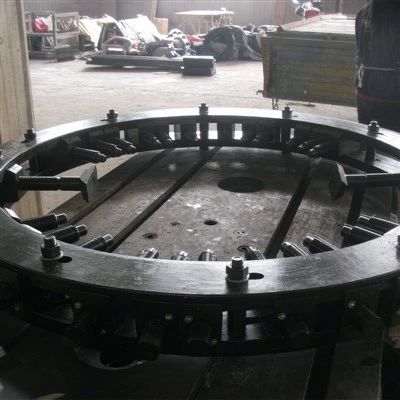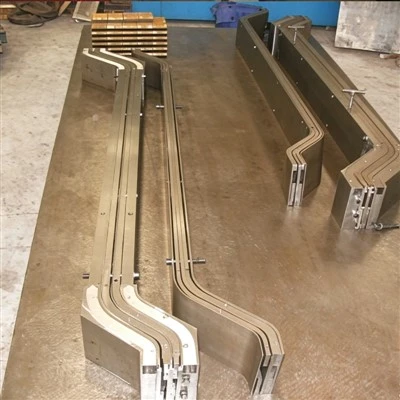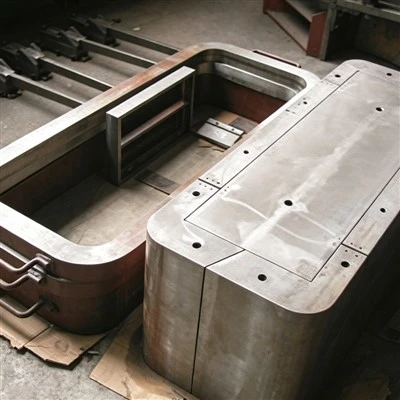


If you’ve spent any time in the electric motor or generator manufacturing space, you’ve likely heard the question I get at least once a week: “Are stator slot molds compatible with CNC machines?” As a supplier of stator slot molds for over a decade, I’ve seen this question come from new engineers setting up their first production line, small job shops upgrading their equipment, and even seasoned plant managers who’ve worked with legacy tooling for 20 years. The short answer is yes—but it’s not a simple one-size-fits-all yes. To get it right, you have to dig into what makes a stator slot mold work, how CNC tooling intersects with that, and the common pitfalls that can derail even the best-intentioned setup.
Let’s start with the basics, because if you don’t understand the core function of a stator slot mold, you can’t begin to talk about compatibility. A stator slot mold is a precision tool used to shape and insulate stator coils before they’re pressed into the slots of a motor stator core. Stators are the stationary part of an electric motor, and the coils wound around them create the rotating magnetic field that makes the motor spin. If the slots aren’t shaped perfectly, the insulation can tear, the coil can sit unevenly, and the entire motor’s performance, efficiency, and lifespan take a hit.
Traditional stator slot molds used to be built on manual or semi-automated machines, right? Back when I started in this industry, most shops had manual mills that required an operator to hand-cut each cavity in the mold steel, adjust tolerances by eye, and test the mold with a physical coil to make tweaks. That process was slow, prone to human error, and great for low-volume, custom builds, but it couldn’t keep up with the demand for higher volume and tighter tolerances that came with the rise of electric vehicles, industrial motors, and renewable energy generators over the last 15 years. That’s where CNC machines come in.
CNC (Computer Numerical Control) machines use pre-programmed software to cut, mill, and shape metal with micron-level precision. For a stator slot mold, that means every slot cavity, edge, and notch can be cut exactly to the design specifications, no hand-filing needed, and you can replicate that exact same mold hundreds or thousands of times without deviation. So on paper, CNC is a perfect match for stator slot molds. But here’s where the nuance comes in: not all stator slot molds are made the same, and not all CNC machines are equipped to handle the unique demands of mold-making.
Let’s break down the specific features of a stator slot mold that matter for CNC compatibility. First, the mold material. Most high-quality stator slot molds are made from tool steel—P20, S7, or H13, depending on the application—because they need to withstand thousands of presses without wearing down. CNC machines that can cut tool steel at the hardness levels we use (which can be up to 55 HRC) need high-torque spindles, rigid workholding, and specialized end mills. A regular CNC mill designed for cutting aluminum or plastic isn’t going to hold the tight tolerances (we’re talking ±0.001 inch, sometimes even tighter) required for a stator slot mold.
Then there’s the geometry of the slots themselves. Stator slots aren’t just straight lines—they’re often notched, tapered, or have specific contours to hold insulation paper and prevent coil movement. For example, the ends of the slots that stick out from the stator core (called the “overhang”) need to be shaped so the coils bend evenly without kinking, which would cause hot spots in the motor. CNC machines excel at complex, repeating geometries, but only if the mold design is digitized correctly. A lot of older stator slot molds were designed on paper, so translating that 2D design into a 3D CAD file that a CNC machine can read is a critical first step. If that translation is off, even a top-of-the-line CNC will make a bad mold.
I’ve seen this play out firsthand with a customer last year. They had a 10-year-old manual stator slot mold that worked fine for their old line of industrial motors, but when they upgraded to a CNC machining center to build new molds, they just copied the old paper design directly into their CNC software. The result was a mold that cut slots that were 0.003 inch wider on one side than the other. It took them three months of trial and error, and a visit to our facility, to figure out that the old manual mold had tiny, hand-filed adjustments that weren’t captured in the digital design. That’s a common mistake: assuming that CNC can just replicate old tooling without updating the design for digital accuracy.
Another key factor is workholding. Stator slot molds are typically large, heavy parts—some are a foot or more in diameter, and several inches thick. When you’re machining a mold, you can’t let it shift even a little, because that will throw off the slot dimensions. CNC workholding for mold making has to be extremely rigid, and often requires custom fixtures tailored to the specific mold design. Cheap, generic vices just won’t cut it. We’ve had customers come to us with CNC-machined molds that have wavy slots, only to find out they used a standard vice that flexed under the cutting pressure of tool steel.
Now, let’s talk about the benefits when compatibility is done right. For our customers that use CNC machines to build their stator slot molds, they see three big improvements: faster lead times, better consistency, and lower costs. Building a stator slot mold with a manual machine used to take two to three weeks, including all the hand-filing and testing. With CNC, we can cut the machining time to a few days, and the design changes are as simple as adjusting a line of code in the software. That’s a game-changer for companies rolling out new motor models, where designs change every few months.
Consistency is even more important. A manual mold-maker might get a mold right 9 out of 10 times, but that 1 out of 10 that’s off means wasted material, failed parts, and downtime. CNC cuts every mold to the exact same specs, so every slot is identical. That translates to more reliable coils, fewer motor failures, and higher overall production quality. I had a customer in Germany a couple of years ago that used to have a 2% defect rate in their stators because of inconsistent slot molds. After switching to CNC-machined molds, their defect rate dropped to less than 0.1%. That’s a massive savings for a company producing 100,000 motors a year.
That said, compatibility isn’t just about building new molds on CNC machines. A lot of our customers have existing CNC machines and want to modify their old manual stator slot molds to work with their new production lines. That is possible, but it comes with caveats. For example, if you have an old mold that’s made of a soft cast iron, you can mill it on a basic CNC, but it won’t hold up as long as a CNC-machined tool steel mold. Also, retrofitting a manual mold to be used with automated coil-winding machines (which are almost always controlled by CNC these days) requires adding precision locating pins and notches that only CNC can cut accurately. If you’re looking to upgrade, I always recommend checking out our related tooling: the Stator Bar Forming Mold (/coil-tooling/stator-bar-forming-mold.html) works seamlessly with CNC coil production lines, as does the Coil Forming Mold (/coil-tooling/coil-forming-mold.html) and Coil Press Mold (/coil-tooling/coil-press-mold.html), to create a fully integrated CNC-compatible tooling system for your entire stator manufacturing process.
Wait, but what about small shops that only have entry-level CNC machines, not industrial-grade ones? I get this question a lot from owners of small job shops that are just starting out. The short answer is: it depends. Entry-level CNCs can handle simple, low-volume stator slot molds for small, low-power motors, but they won’t have the rigidity or precision for high-volume applications or large stators for industrial or renewable energy motors. A friend of mine runs a shop in Ohio that builds motors for small farm equipment, and he uses an entry-level CNC to cut his stator slot molds. They work great for his needs, and he’s saved a lot of money compared to buying an industrial mold-maker. But when he landed a big contract for generators for a wind turbine project, he had to come to us for CNC-machined molds, because his entry-level machine couldn’t handle the size or tolerance requirements. That’s the sweet spot for small shops: know what your CNC is capable of, and don’t try to push it beyond its limits.
Another common myth is that CNC-machined stator slot molds are more expensive than manual ones. That’s true if you’re only looking at the upfront cost of the mold, but when you factor in lead time, defects, and downtime, the CNC mold is almost always cheaper in the long run. Let’s do a quick math example: a manual mold costs $5,000, takes 2 weeks to build, and has a 5% defect rate in production. A CNC mold costs $7,000, takes 3 days to build, and has a 0.5% defect rate. For 10,000 motors a year, the manual mold would cost you $25,000 in defects and lost production, while the CNC mold would cost $3,500. Over two years, the CNC mold saves you $19,000, plus you get your new motor line up and running a week earlier, which means you start generating revenue faster. That’s a no-brainer for most companies.
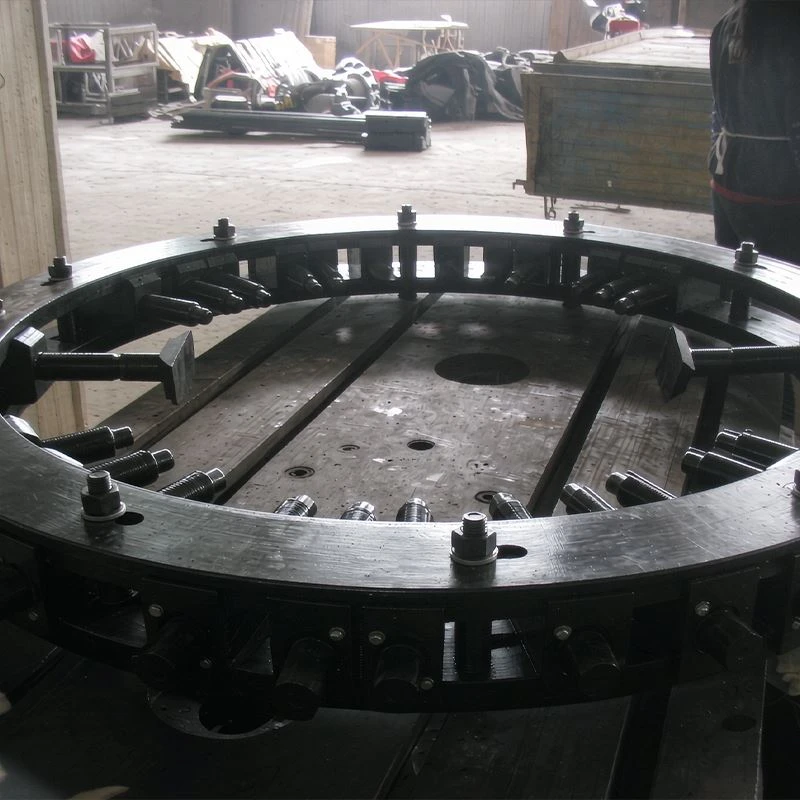
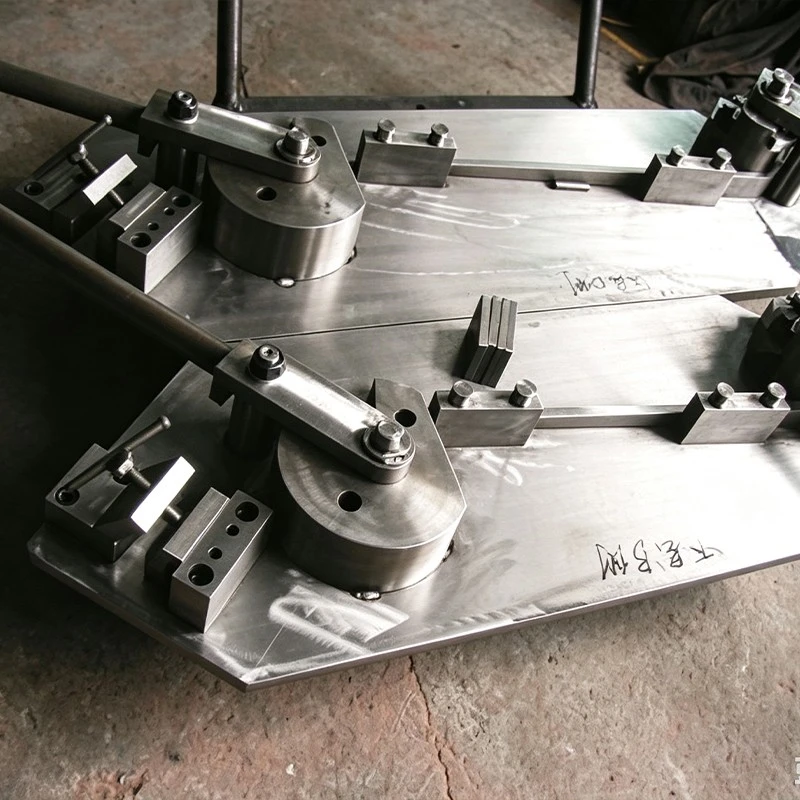
But there are still times when manual stator slot molds make sense. If you’re building a custom, one-off motor for a niche application—like a specialty drone motor or a small hydroelectric generator—hand-built molds can be just as accurate as CNC, and they’re much cheaper to make in small quantities. The issue comes when you try to scale that production, because manual molds can’t be replicated consistently at volume. For high-volume production, CNC compatibility is non-negotiable, in my experience.
So, putting it all together: yes, stator slot molds are compatible with CNC machines, but only if you do it right. That means using the right CNC machine (high-torque, rigid, for tool steel), working from accurate 3D digital designs, using proper workholding, and matching the mold to your production volume and application. If you’re not sure where to start, we’ve helped hundreds of customers with this exact transition. We offer custom CNC-machined stator slot molds, and we can also help you integrate them with your existing CNC machines, no matter what brand or model you have. You can see our full line of CNC-compatible stator tooling at our dedicated page: the Stator Slot Mold (/coil-tooling/stator-slot-mold.html) is designed specifically to work with all major CNC machining centers and coil winding systems, so you can upgrade your production line without having to replace all your equipment at once.
If you’re a manufacturer looking to discuss whether your current CNC setup works with stator slot molds, or if you’re ready to look at upgrading your tooling, feel free to reach out for a consultation. We work with everything from small job shops to global motor manufacturers, and we can tailor a solution to fit your needs and budget. Don’t let compatibility questions hold you back from improving your production efficiency and product quality.
References
- Electric Motor Manufacturing Handbook, 3rd Edition. Society of Manufacturing Engineers, 2021.
- CNC Machining for Precision Tooling. Modern Machine Shop, 2022.
- Stator Design and Manufacturing for Energy-Efficient Motors. John Wiley & Sons, 2020.
- Tooling Compatibility in Electric Motor Production. International Journal of Manufacturing Technology, Vol. 112, No. 4, 2021.