

If you’ve ever worked with rotating electrical machinery—whether hydropower generators, large industrial motors, or turbine-driven power units—you’ve likely heard the terms “salient pole coil” and “field winding” thrown around interchangeably. But after 12 years as a salient pole coil supplier, I can tell you these two are not the same, and mixing them up can lead to everything from underperforming equipment to costly downtime. Let me break this down plainly, based on the hundreds of projects my team has supported across North America and beyond, with real-world context that goes beyond textbook definitions.
First, let’s ground this in what each component does for the big picture: every large rotating machine (above 1 MW, typically) relies on a magnetic field to turn electrical energy into torque (for motors) or vice versa (for generators). That field doesn’t just pop out of nowhere—it’s generated by coils wrapped around the rotor, the central spinning part of the machine. For machines that use a salient pole design (think most hydropower generators, many low-speed turbine units, and heavy industrial motors that run at less than 3,600 RPM), the magnetic poles stick out like teeth from the rotor core, and that’s where the confusion between salient pole coils and field winding starts.
Let’s start with field winding, because it’s the broader, more overarching system. Field winding refers to the entire set of insulated conductors that carry DC current to create that rotor magnetic field. It’s not a single part—it’s a complete circuit made up of multiple coils (called field coils) arranged around the rotor, plus slip rings, brushes, and the wiring that connects everything. Think of field winding like the foundation of a house: it’s the whole system that supports the core function, not just one material or part. For example, a 100 MW hydropower generator might have a field winding with 40 separate coils, all working together to generate a uniform magnetic field as the rotor spins. That field winding is the DC-powered heart of the rotor—without it, there’s no magnetic field, and the machine can’t produce or use electrical power.
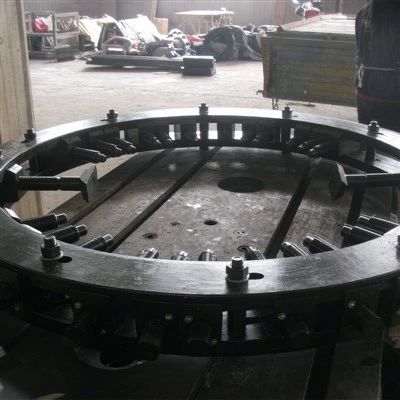
Now, the salient pole coil is a specific, key component of that field winding. It’s the individual coil that wraps around each protruding salient pole on the rotor. These poles are the distinct, outward-facing magnetic “teeth” of the rotor, and each gets its own dedicated coil wound tightly around it (under high pressure, typically, to prevent movement from centrifugal force when the rotor spins at hundreds of RPM). If the field winding is the entire house, the salient pole coils are the individual wall frames that make up each room—each serves a specific, non-interchangeable purpose within the larger structure.
Let me clarify with a practical example that comes up every week in my work. Last year, a customer running a 50 MW hydropower plant called in a panic: their generator’s magnetic field was uneven, causing excessive vibration and reducing output by 12%. Their maintenance team had replaced a “field winding coil” but still had the issue, and it turned out they’d ordered a generic round wire coil meant for a non-salient pole (cylindrical) rotor, not the rectangular, heavy-duty salient pole coil their machine required. When they switched to the correct custom wound salient pole coil from our stock for hydro generators—you can learn more about that specific application here: Hydro Generator Pole Coil—the vibration dropped immediately, and their output returned to full capacity within 48 hours. That moment drove home how critical the difference is: the field winding is the whole circuit, but the salient pole coil is the precise, application-specific part that delivers the magnetic performance you need.
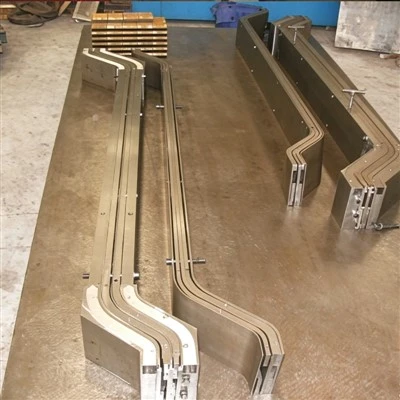
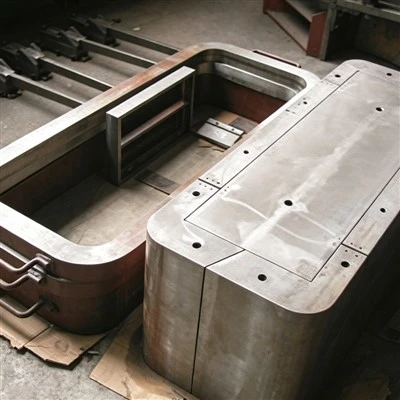
Another common point of confusion: non-salient pole rotors (used in high-speed turbines, for example) have a cylindrical rotor core with no protruding poles, so they use a different type of field winding that’s a single continuous coil. But when we work with customers who need salient pole designs—most often for low-speed, high-torque applications like hydropower generators or large industrial pumps—each pole’s coil is custom shaped to fit the pole’s unique geometry. That’s why when I talk about our products, I don’t just sell “field winding parts”—I sell Rotor Pole Coil and Turbine Pole Coil units that are tailored to fit the exact pole count, size, and operating conditions of their specific machine.
Let’s get into the technical differences to back up the real-world examples, because this isn’t just semantics. First, function: Field winding’s primary job is to carry DC current from an external power source (via slip rings and brushes) to create a rotor magnetic field. That means the entire winding is designed for consistent DC flow, with uniform insulation across all components. Salient pole coils, by contrast, are designed to fit the irregular, protruding shape of each rotor pole, so they have custom shapes (rectangular, sometimes with notches or bends) that can’t be interchanged between poles or between different machine models. They’re also engineered to withstand far higher centrifugal force than non-salient winding coils—when a rotor spins at 200 RPM, a 1-meter long salient pole coil can experience forces equal to 10 tons pulling outward, so they’re wound with high-conductivity copper and baked with epoxy to hold their shape.
Next, structure: Field winding is an assembly. It includes all the individual coils, plus the slip rings, brush rigging, lead wires connecting the coils to the power supply, and the banding that holds all coils in place on the rotor. You can’t replace just one part of field winding and call it a fix—if a field winding fails, you might need to rewind the entire rotor or replace the full set of coils. Salient pole coils are discrete, replaceable units. Each one is a standalone coil that wraps around a single pole, so if one fails, you only need to swap that specific coil out, not the whole system. That’s a huge cost saver for operators—our customers often keep a set of spare Salient Pole Coil units on hand, so if a coil fails during a scheduled shutdown, the replacement takes just a few hours instead of days.
Operating conditions are another key difference. Field winding components (especially slip rings and brushes) are exposed to continuous electrical current and wear, so they require regular maintenance: cleaning, tightening, or replacement every 12 to 24 months depending on use. Salient pole coils, by contrast, operate in a more static (relative to the spinning rotor) environment, but they’re exposed to extreme heat (from the current flowing through them) and vibration. That’s why our salient pole coils use Class H insulation—rated for temperatures up to 180°C—because in a hydropower generator, these coils can run hot for weeks at a time, and failing insulation is the number one cause of coil downtime.
I can’t tell you how many times I’ve gotten calls from new customers who mix these terms up. Last quarter, a small manufacturing plant told me they needed to rewind their entire field winding, but when I asked for their rotor specs, they only needed one replacement salient pole coil that had burned out after a year of high-load operation. They’d been overspending for years because they thought replacing the entire field winding was necessary when a single, cheap (relatively speaking) coil was the problem. That’s why taking the time to understand these terms isn’t just for engineers—it’s for any operator who wants to keep their machine running without unnecessary costs.
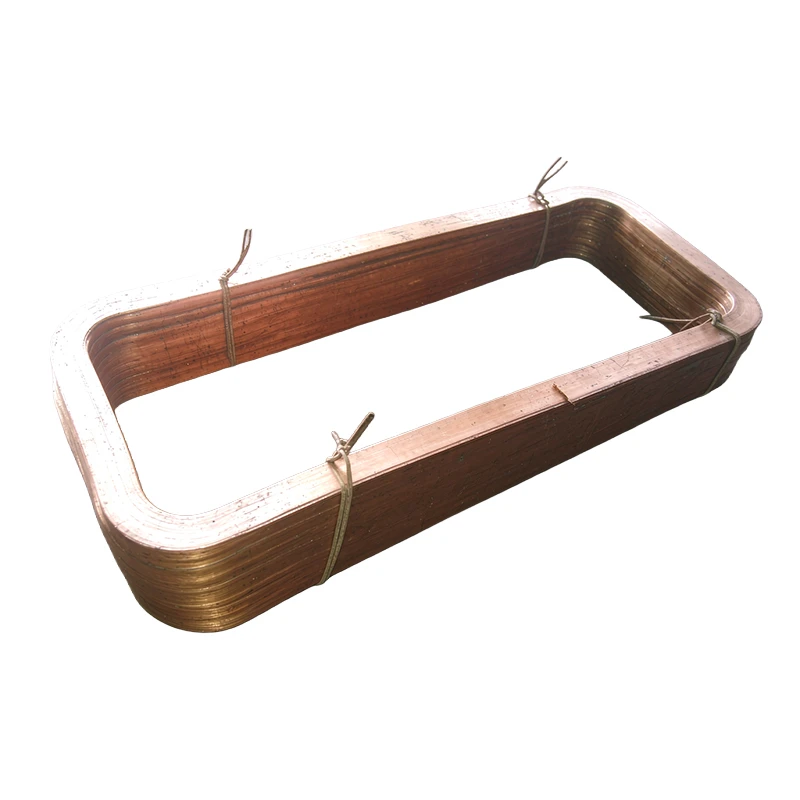
Let’s wrap this up with a clear takeaway to avoid future mix-ups: If you’re talking about the whole system that creates the rotor magnetic field, that’s field winding—slip rings, brushes, and all. If you’re talking about the individual, shaped coil that wraps around each protruding pole of a salient rotor, that’s the salient pole coil. The salient pole coil is a critical, replaceable part of the field winding assembly for salient pole machinery, the most common type in low-speed, high-torque applications.
If you’re working on a hydropower generator, large turbine, or industrial motor and aren’t sure whether you need a replacement salient pole coil, a full field winding rewind, or any other rotor component, our team has decades of experience helping customers diagnose and fix these issues. We custom manufacture salient pole coils tailored to your exact machine specifications, from small industrial motors to multi-megawatt hydro units, with fast lead times to minimize downtime. Reach out to our team to discuss your needs and get a quote today.
References
- Fitzgerald, A. E., Kingsley, C., & Umans, S. D. (2003). Electric Machinery (6th ed.). McGraw-Hill.
- IEC Standard 60034-1: Rotating Electrical Machines – Part 1: Rating and Performance. International Electrotechnical Commission.
- Hydropower Plant Maintenance Handbook (2021). International Hydropower Association.
- “Salient Pole Rotor Design for Synchronous Generators.” IEEE Transactions on Energy Conversion, Vol. 32, No. 4, December 2017.
- Brown, S. D. (2019). Practical Rotor Coil Design for Large Industrial Motors. Journal of Electrical Maintenance & Engineering.