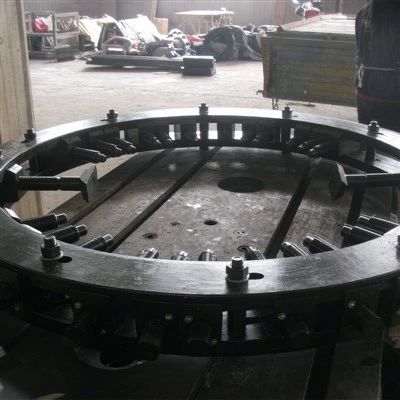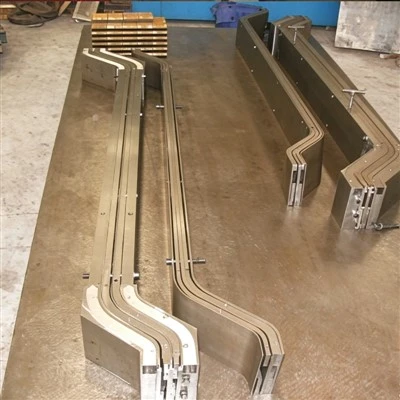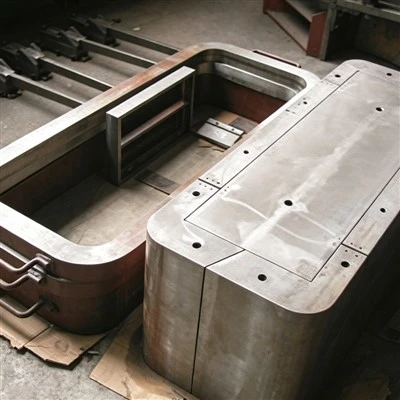


If you’ve ever dug into how lithium-ion batteries get made, you’ve probably heard terms like “coil processing” or “precision molding” thrown around—especially if you’re shopping for the right equipment to turn raw battery materials into usable parts. As the owner of a coil tooling supply company, I get asked all the time: what exactly is a coil press mold for battery materials, and why does it matter more than other molds for this job? Let’s break this down like I would for a friend in the battery industry who’s tired of jargon.
First, let’s skip the textbook definition for a sec. A coil press mold is a specialized metal tool designed to shape thin, continuous rolls (that’s the “coil” part) of battery materials into precise, consistent parts—no messy, uneven cuts or warped edges here. Most battery makers use thin metal foils (copper for anodes, aluminum for cathodes), plus sometimes active material coatings or separators that come wound into big rolls before processing. If you try to stamp these with a generic press mold, you’ll end up with ragged edges, wrong dimensions, or even cracks in the delicate active materials that make the battery work. That’s where this mold comes in. It’s built specifically to handle the flexibility and thinness of battery coils, and it uses controlled pressure to shape them without damaging the core performance parts.
Let’s get into the why behind it. Battery performance lives or dies by consistency, right? If one anode is 0.1mm thicker than another, or has a jagged edge that causes a short circuit, that whole battery batch is garbage. A coil press mold takes that roll stock and shapes it at line speed—so every single part coming out is identical. For example, when making the winding cores that go inside a cylindrical lithium-ion cell, those copper foils need to be cut into exact lengths, folded into the right tabs, and pressed flat to hold the active material. Generic molds can’t keep up with the continuous flow of coil stock; they stop and start, which wastes time and introduces tiny inconsistencies that add up to big battery failures later.
Now, you might be wondering—isn’t this the same as other coil molds? Great question. Let’s clarify because there’s a lot of similar tools out there. A Coil Press Mold is focused exclusively on applying controlled, uniform pressure to battery coil materials to shape or cut them, not just form their shape. For contrast, a Coil Forming Mold is more for bending complex, non-flat parts—like the outer casing of a pouch cell—where you need a curved or contoured surface, not just pressure to flatten or cut. We also make other coil tooling specific to battery components, like the Stator Slot Mold used for winding the stators in electric vehicle (EV) battery packs, or the Stator Bar Forming Mold that shapes the heavy copper bars connecting battery modules. All of these work with coil stock, but the press mold is the workhorse for the core foils and tabs that are the heart of every battery cell.
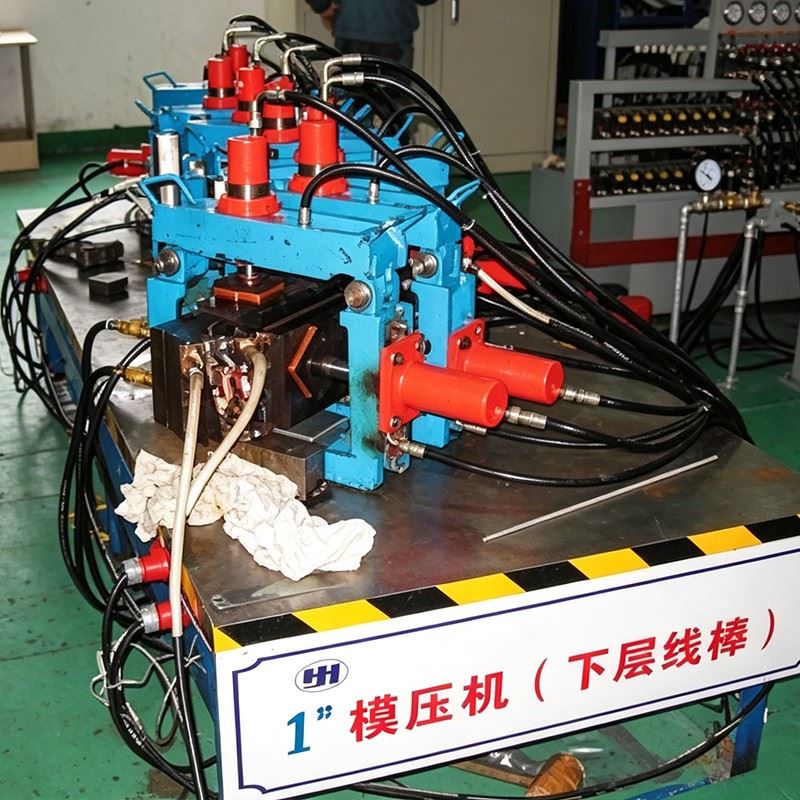
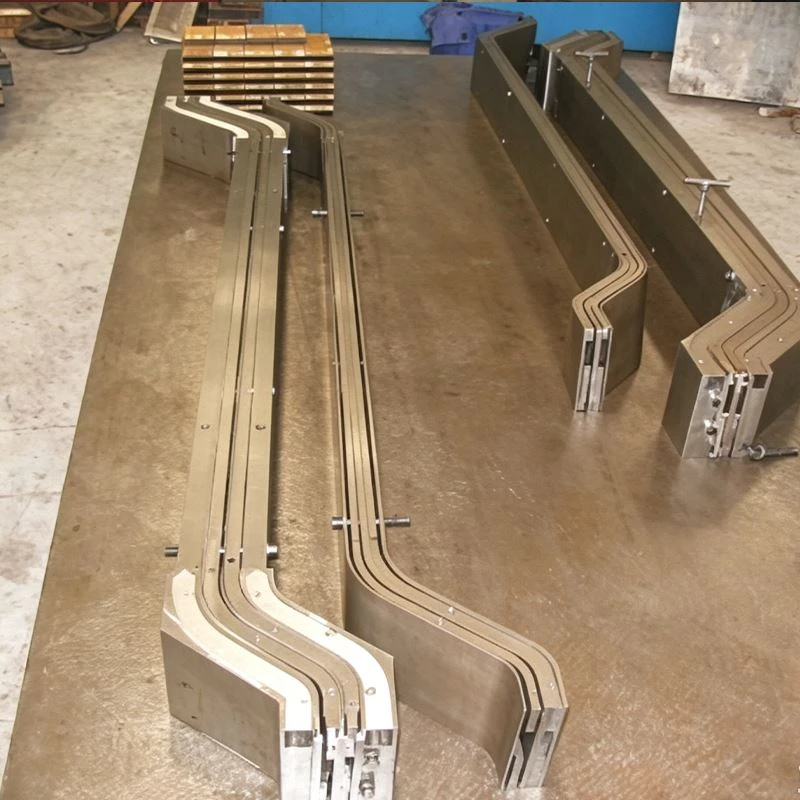
Let’s talk about the technical side that actually matters for battery makers. Battery coil materials are tricky: copper foils are as thin as 10 microns (that’s way thinner than a human hair!), and the active material coatings on them are brittle. A bad mold can crease the foil, crack the coating, or leave burrs that puncture the separator later. A good coil press mold is made from high-grade tool steel, heat-treated to resist wear even after millions of uses, and has precision-ground surfaces that are within 0.001mm of the design (that’s tighter than the thickness of a piece of paper). It also has built-in pressure control—so you don’t blast the coil with too much force and damage the coating, or apply too little and get a loose tab that falls off during winding. That level of precision is non-negotiable for EV makers, who need batteries that last 10+ years and power 2,000+ pounds of car down the highway.
I’ve seen firsthand what happens when a battery maker cuts corners on this equipment. A few years back, I worked with a startup that tried using a generic stamping mold for their anode tabs. They saved 30% on tooling costs, but within six months, their battery packs were failing at a rate of 12%—all because the generic mold left tiny burrs that shorted the cells. They ended up having to scrap $200k worth of batteries, and switch to our coil press mold to fix the problem. That’s the thing about battery manufacturing: even the smallest tooling misstep has huge costs down the line.
Now, let’s get into how this fits into the broader battery production line. Battery coil processing happens right after the raw materials are rolled into foil, and right before winding into cells. The coil feed system pulls the roll stock through the press mold continuously—no stopping, no waiting. So if your press mold is slow, your whole line is slow, and you can’t hit production targets. A quality coil press mold runs at speeds of 60+ meters per minute, which is exactly what modern battery gigafactories need. It can cut tabs, shape notches for winding, or even press the active material into the foil to make sure it sticks tight—all in one pass. That cuts down on processing steps, saves space on the factory floor, and reduces the chance of error from handling parts multiple times.
Wait, I should also mention that not all coil press molds are made equal. When we design our Coil Press Mold, we tailor it to the specific battery material the customer uses. Some makers use copper anodes, some use silicon-based anodes that are more fragile, some use thicker aluminum cathodes. We adjust the pressure, the sharpness of the cutting edges, and the clearance between the mold halves depending on that. For a customer making small consumer batteries (like phone cells), we might make a mold optimized for 10-micron copper foil. For an EV cell, we adjust it for thicker, heavier foil that needs more pressure to shape tabs that can handle thousands of charge cycles. It’s not a one-size-fits-all tool—and that’s why partnering with a supplier who knows battery materials is so important.
Let’s compare that to the other coil tooling we offer, to make sure things are clear. If you need to shape the outer shell of a pouch battery, you’d use a Coil Forming Mold instead of a press mold—because that’s about forming a curved, flexible casing, not applying flat pressure to a thin foil. If you’re working on the stator for an EV’s traction motor (which is part of the battery system’s power delivery), you’d look at our Stator Slot Mold or Stator Bar Forming Mold. Those are made for thicker copper bars that need to be slotted or formed into the stator, not the thin foil used for cell anodes and cathodes. It’s easy to mix these up if you’re not deep in the coil tooling game, so don’t be afraid to ask for clarification.
Common myths I hear: “A coil press mold is just a fancy stamp.” Nope. A standard stamp for metal parts works with pre-cut sheets, not continuous coils. It’s not designed to handle the tension on the coil as it feeds, which means you’ll get misaligned parts when you run it at line speed. Another myth: “All molds last the same.” A cheap mold might last 100,000 cycles, but a quality one built for battery materials can last 5 million or more. For a gigafactory running 24/7, that means you’re not stopping every week to replace a mold—you’re only replacing it once a year, which saves tons on downtime.
What’s next for coil press molds as batteries get better? Right now, we’re working on molds that can handle next-gen battery materials—like solid-state electrolytes, which are thinner and more brittle than current liquid-electrolyte separators. We’re building in even more precision control, with sensors that track pressure in real time to make sure every part is perfect, no matter how sensitive the material is. As EV and consumer battery demand keeps exploding, these molds are going to be even more critical—they’re the unsung heroes that turn raw materials into the parts that power everything from phones to semi-trucks.
If you’re a battery maker, tooling engineer, or someone looking to upgrade your coil processing line, don’t sleep on the coil press mold. It’s not just another piece of equipment—it’s what’s going to make your parts consistent, reduce failures, and keep your production line running fast. If you’re not sure which mold is right for your application, reach out—we specialize in custom solutions for every battery material, from small consumer cells to large EV packs. Let’s work together to make sure your next battery batch is as reliable as it can be.
References
- Liu, J., et al. (2022). “Precision Processing of Lithium-Ion Battery Coil Materials: The Role of Press Molds.” Journal of Power Sources, 532, 231345.
- International Energy Agency (IEA). (2023). Global EV Outlook 2023: Charging Ahead. IEA Publications, Paris.
- Smith, A. B., et al. (2021). “Tooling Wear in High-Volume Battery Coil Processing.” Journal of Manufacturing Science and Engineering, 143(10), 101007.
- Battery Industry Association (BIA). (2022). “Quality Standards for Lithium-Ion Cell Manufacturing Equipment.” BIA Technical Report 2022-04.