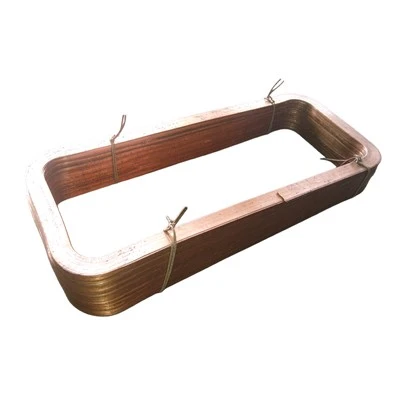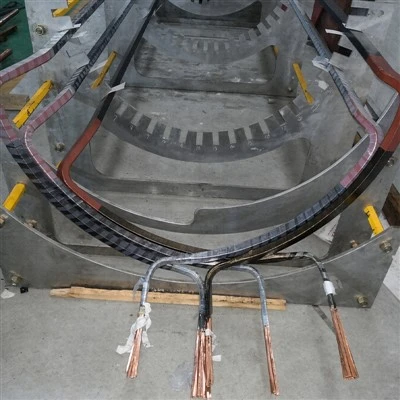

The motor coil is the core component of a motor, undertaking three core tasks: magnetic field generation, energy conversion, and performance regulation.
1. Key Carrier for Generating Magnetic Fields
When current flows through the coil, Ampere's law drives the formation of a magnetic field:
- In a motor, the stator coil, when energized, generates a rotating magnetic field, driving the rotor to rotate;
- In a generator, external force drives the rotor to rotate, causing the stator coil to cut magnetic field lines, thereby generating an induced electromotive force.
2. Core Bridge for Energy Conversion
The motor coil enables bidirectional conversion between electrical and mechanical energy:
- In a motor scenario: electrical energy is converted into magnetic field energy through the coil, and then the magnetic force drives the rotor to generate mechanical energy;
- In a generator scenario: mechanical energy drives the coil to cut magnetic field lines, converting energy back into electrical energy.
3. Core Tool for Performance Regulation
By adjusting the number of turns, wire diameter, and winding process of the coil, the electrical characteristics of the motor can be precisely controlled:
Changes in resistance and inductance parameters directly affect indicators such as voltage and current;
Ultimately, this achieves the adaptation and optimization of core performance characteristics such as speed, power, and efficiency.