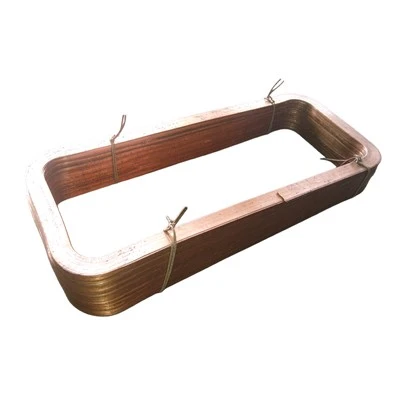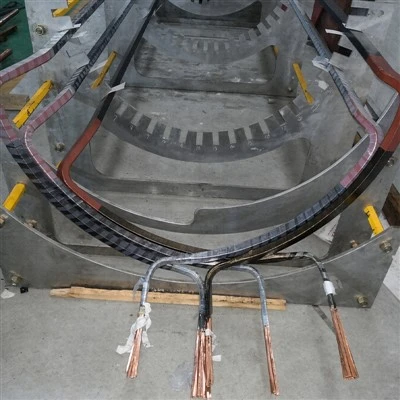

Stator coils are insulated conductor assemblies embedded in stator slots in rotating electrical machines. The stator coils (windings) and the stator core together constitute the stator assembly. The stator core has multiple slots, and the stator windings are embedded within these slots. The stator windings consist of multiple hairpin coils wound in multiple layers (L layers) within the slots. A typical stator winding can consist of multiple hairpin coils wound in multiple layers (L layers) within the slots. Each phase stator winding may include two sub-windings, each with multiple hairpin coils distributed in different layers of the slots, including short-pitch hairpin coils in the innermost layer (first layer), long-pitch hairpin coils in the outermost layer (Lth layer), and intermediate hairpin coils in the middle layers.
Stator coils are mainly divided into two categories: round wire motors and flat wire motors. Flat wire motor stator windings use rectangular cross-section conductors (flat copper wire), such as Hair-pin, I-pin, and X-pin. The end structure of flat-wire motor windings facilitates heat dissipation, and their slot fill factor (reaching over 60%) is significantly higher than that of round-wire motors (approximately 40%). The large contact area between flat-wire windings enables the construction of an efficient heat conduction network and enhances armature rigidity. The specific forms of flat-wire motors are constantly evolving, including not only Hair-pin motors but also X-Pin, Mini-Pin, Umini-Pin, and Micro-Pin motors with shorter end heights, better suited for high-voltage platforms, aiming to further optimize space utilization, electrical performance, and manufacturing feasibility.