

If you’ve ever stood next to a large industrial motor or generator—say, the ones that power manufacturing lines, wind turbines, or power plant auxiliary systems—you might not have noticed the solid, copper-colored bars tucked into their stator cores. These aren’t just wires: they’re insulated stator bars, the unsung workhorses that carry the high voltage current that spins the motor’s rotor and makes everything work. As a supplier of insulated stator bars, I get asked this question all the time: What is the thickness of insulation on a stator bar? The answer isn’t a one-size-fits-all number—it depends on a host of factors, from the voltage the bar will carry to the cooling method it uses, and even the harsh operating environment it will face. Let me break down what goes into getting that thickness right, and why it matters more than you might think.
First, it’s important to ground this in context. Stator bars aren’t the small, thin wires in your home’s power cords. They’re heavy, rigid conductors made of copper (that’s where you’ll find the link to Copper Stator Bar if you want to dive deeper into the core material) shaped to fit neatly into the stator’s slots. The insulation isn’t a thin plastic wrap—this is high-voltage insulation, designed to withstand thousands of volts, extreme heat, vibration, and even moisture. So when we talk about insulation thickness, we’re talking about a system, not just a single layer.
Let’s start with voltage, the biggest driver of insulation thickness. The primary job of stator bar insulation is to prevent electrical breakdown—meaning the current jumps from the copper conductor to the stator core, where it shouldn’t. For lower-voltage applications, say 6.6 kV, the insulation is relatively thin: around 2 to 3 millimeters, or about 0.08 to 0.12 inches. But as voltage goes up, the thickness increases dramatically. For 13.8 kV bars, you’re looking at 3 to 4 millimeters, and for the 25 kV or higher bars common in large generators and heavy industrial motors, insulation can be 5 to 8 millimeters thick—sometimes more for the most demanding applications. That makes sense, right? Higher voltage means more electrical force, so you need a thicker barrier to stop that force from piercing through.
But voltage isn’t the only factor. The type of insulation system also plays a huge role. Modern stator bars use what’s called a “turn-to-turn” and “groundwall” insulation system. The groundwall insulation is the thick outer layer that touches the stator core, while the turn-to-turn insulation wraps around each individual conductor inside the bar, separating them from each other. For the groundwall, which is exposed to the full stator voltage, thickness is calibrated based on both voltage and the material’s dielectric strength—how well it resists electrical breakdown. Most of today’s insulation is made from epoxy-mica composites, which are ideal because they’re incredibly durable, heat-resistant, and have high dielectric strength.
Cooling method is another critical piece of the puzzle. If your stator bar is water-cooled (you can check out more on Water Cooled Stator Bar to learn about this technology), the insulation thickness is different than for an air-cooled bar. Water-cooled bars run much hotter, so they need insulation that can handle higher temperatures—but because they’re often designed with thinner groundwall insulation to improve heat transfer, there’s a tradeoff. Wait, that might sound counterintuitive: thinner insulation for a bar that runs hotter? It’s not that simple. The insulation’s thermal conductivity matters too. Epoxy-mica still has good thermal properties, so even a slightly thinner layer can handle the higher heat as long as the cooling system is working correctly. But if you get the thickness wrong here—too thin, and you risk breakdown when the bar heats up; too thick, and the heat can’t escape efficiently, leading to insulation degradation over time. That’s why our team spends so much time testing insulation thickness for each cooling configuration we supply.
Operating environment also can’t be ignored. Stator bars in power plants, for example, are exposed to constant vibration, humidity, and even chemical contaminants. In offshore wind applications, they’re exposed to salt air and temperature swings that put extra stress on the insulation. For these harsh environments, we often specify a thicker outer layer of insulation that’s also coated in a special jacket to resist moisture and corrosion. That extra thickness isn’t just for electrical protection—it’s mechanical protection too, to prevent nicks, cracks, or wear that could compromise the insulation’s integrity over time. A nick in insulation that’s too thin is a major risk; a nick in a slightly thicker, more resilient layer is far less likely to cause a failure.
I’ve seen firsthand what happens when insulation thickness is miscalculated. Early in my career, we supplied a set of stator bars for a hydroelectric generator that was operating at 18 kV. We based the insulation thickness on standard industry guidelines, but we didn’t account for the generator’s unique vibration profile—higher than typical for hydro applications. Within two years, we had three insulation failures because the thinner outer layer developed cracks from the constant vibration. We went back, re-engineered the bars with 1.5 millimeters of extra insulation thickness, and added a more flexible top layer to absorb vibration. The bars have been running without issues for over a decade now. That experience taught me that insulation thickness isn’t just a calculation on a spreadsheet—it’s a balance of electrical, thermal, mechanical, and environmental factors.
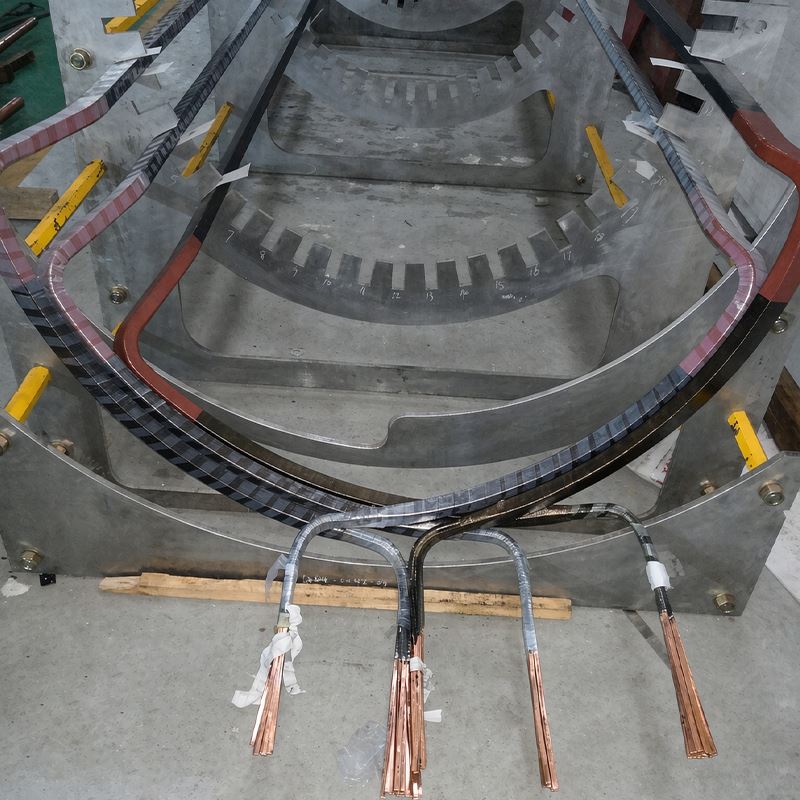
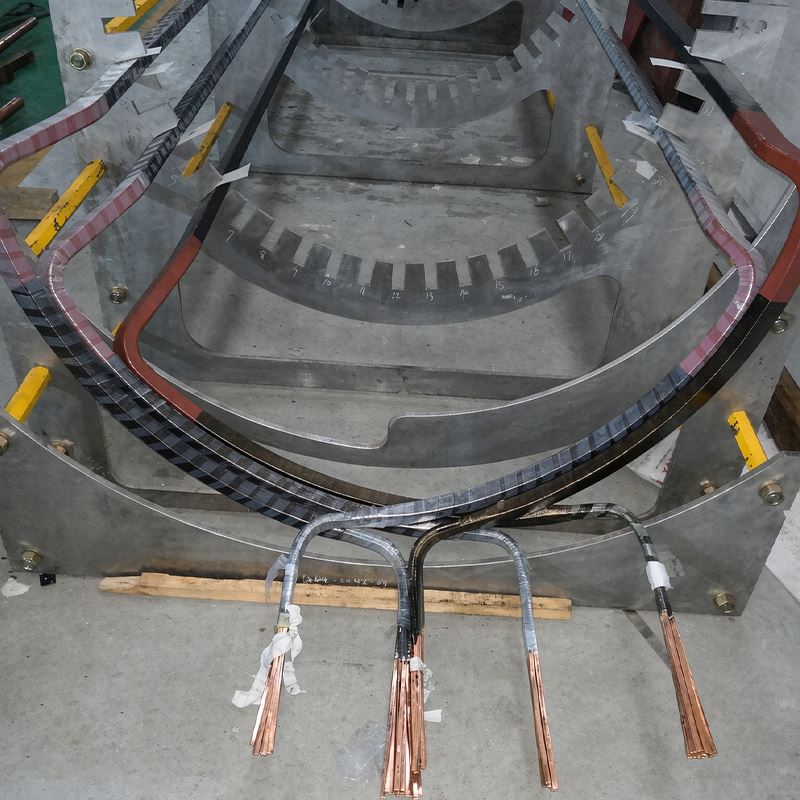
So how do manufacturers actually determine the right thickness for a given stator bar? It’s not guesswork. We follow strict industry standards, like those set by the Institute of Electrical and Electronics Engineers (IEEE), which specify minimum insulation thickness based on voltage and application. But we also go further than the minimum, because we know real-world operating conditions are rarely ideal. For example, a High Voltage Stator Bar (link to that product page) designed for 30 kV service will have a groundwall insulation thickness of around 7 millimeters, plus an extra 0.5 millimeters of semi-conductive coating to prevent partial discharge—those small, invisible electrical leaks that eat away at insulation over time. That semi-conductive layer isn’t counted as part of the primary insulation thickness for voltage breakdown, but it’s just as important for long-term reliability.
For Generator Stator Bar applications, which often run at full load 24/7, year after year, we also consider thermal aging. Insulation breaks down over time when exposed to high temperatures, even if it’s not failing electrically. So we might specify a slightly thicker insulation layer than the minimum to account for that aging, or choose a higher-grade epoxy-mica material that can retain its dielectric strength longer at elevated temperatures. It’s a tradeoff: thicker insulation adds a little to the bar’s overall size, but it extends the bar’s lifespan, which is critical for generators that cost millions of dollars to replace and can’t be shut down for repairs easily.
You might be wondering: is there a standard range I can refer to? To sum it up, for most industrial stator bars, insulation thickness ranges from 2 millimeters (for low-voltage, small motors) up to 8 millimeters for high-voltage generator bars. The sweet spot depends on all the factors I mentioned, and every project is unique. That’s why when you’re looking for an Insulated Stator Bar, it’s not enough to just ask for “high voltage”—you need to share your application’s voltage, cooling method, operating environment, and expected lifespan to get the right insulation thickness.
At our company, we don’t just sell off-the-shelf stator bars. Every bar we supply is engineered to the exact specifications of the customer’s project. We work closely with motor and generator designers to map out every variable—from the maximum operating temperature to the vibration frequency to the ambient humidity—and tailor the insulation thickness (and the insulation system itself) to meet those needs. We’ve built our reputation by delivering bars that last for decades, not just a few years, and that starts with getting that insulation thickness right.
If you’re in the market for a stator bar, whether for a new motor or replacing an old one, don’t settle for a one-size-fits-all solution. The insulation thickness is a critical detail that can mean the difference between years of reliable operation and costly downtime. We have a team of engineers ready to help you figure out exactly what thickness your application needs, and to provide you with a high-quality Copper Stator Bar, Water Cooled Stator Bar, High Voltage Stator Bar, or Generator Stator Bar that’s built to your exact requirements. Contact us today to discuss your project and learn more about how we can support your needs.
References
- IEEE Standard 286-2000, Recommended Practice for Measurement of Power Factor Tip-Up of Electric Machine Stator Insulation Systems.
- Bolt, P. et al., "Insulation Systems for Large Rotating Machines," IEEE Transactions on Industry Applications, Vol. 52, No. 3, May-June 2016.
- International Electrotechnical Commission (IEC) Standard 60034-15, Specification for Certain Parts of Rotating Electrical Machines - Insulation System Qualification and Type Tests.
- Klein, J., "Advances in Epoxy-Mica Insulation for High-Voltage Stator Bars," Proceedings of the International Conference on Large High Voltage Electric Systems (CIGRE), 2018.