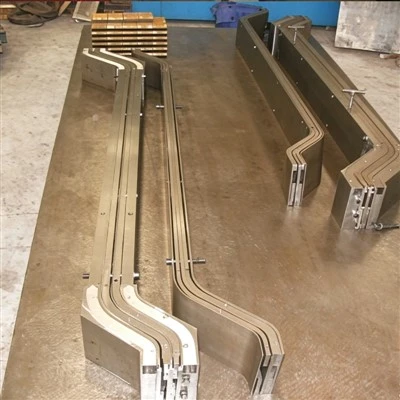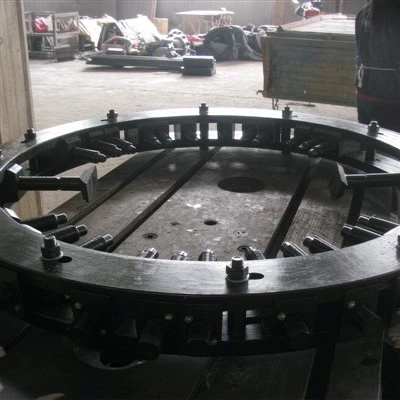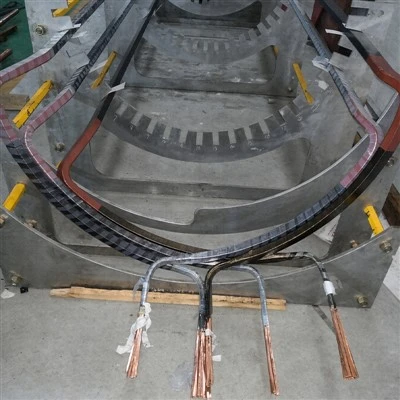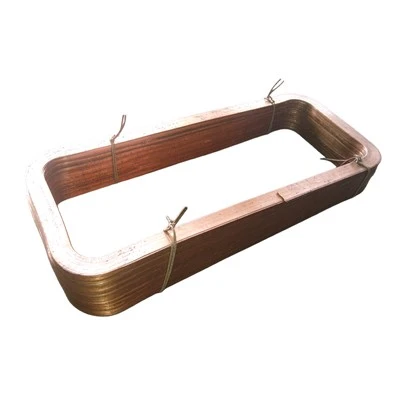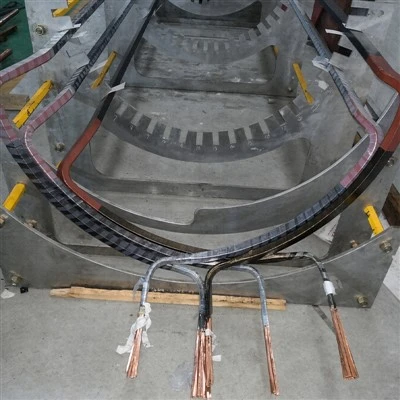

Stator bars typically consist of two rows of bar-type bars composed of several strands connected in parallel. Circulating current causes uneven temperature rise between the strands and generates losses. To reduce circulating current losses, stator bars often employ Roebel transposition technology (see the core technology section for details). To further reduce circulating current losses, calculations based on the mechanism of circulating current generation are necessary, and software for optimizing the transposition design of stator bars in large hydro-generators has been developed. The stator bar parallel joint structures of hydro-generators mainly have two typical types: clamp type and electric joint type. The stator diameter of the clamp type structure is about 7% larger than that of the electric joint type structure, and its welding workload is greater.
Methods to improve the end current-carrying capacity of stator bars through structural design include processing low-resistance anti-corona layers and high-resistance anti-corona units on the bar body. A method for characterizing the main insulation degradation of generator stator bars based on polarization current and de-trapping current can be used to evaluate the post-curing and degradation state of insulation under thermal stress.
The study of the electric field in the stator bar insulation structure of high-voltage motors requires analysis of the electric field distribution in the slots, inner shield, and ends. Research shows that the highest potential of the anti-corona layer in the slot-type insulation structure is approximately linearly positively related to the surface resistivity of the anti-corona layer material and the bar voltage, and approximately linearly related to the square of the axial length of the air gap between the spacers. Comparing the slot-type and corrugated plate-type insulation structures, the highest potential of the anti-corona layer is significantly lower when using side corrugated plates than when using spacers.